
What is Digital Marketing for Startups?
May 15, 2026
Beginner-Friendly Guide (2026)
Startups often struggle to gain visibility, attract traffic, and convert their first customers in the early stages. With limited budgets, no established brand, and fierce competition, the road to growth can feel overwhelming. That’s where digital marketing for startups becomes a game-changer.
Digital marketing helps startups grow faster by leveraging cost-effective online channels — including SEO, content marketing, social media, email, and paid advertising. Unlike traditional marketing, these strategies are measurable, scalable, and accessible even on a tight budget. Whether you’re a solo founder or a small team, this guide will walk you through everything you need to know to get started with startup digital marketing in 2026.
What is Digital Marketing for Startups?
Digital marketing for startups refers to the use of online channels and strategies to promote a product or service, attract customers, and drive business growth. It encompasses everything from search engine optimization (SEO) and content creation to social media campaigns and email automation.

Unlike traditional marketing — which relies on print ads, billboards, or TV commercials — digital marketing operates entirely online. This makes it far more accessible and cost-effective for early-stage companies. A startup with a $500/month marketing budget can still compete with larger players if they use the right online marketing for startups strategies.
Why do startups need digital marketing right from the beginning? Because the sooner you build your online presence, the sooner you start generating organic traffic, building brand authority, and acquiring customers without burning through your runway.
Why Digital Marketing is Important for Startups
Lower Customer Acquisition Cost
Paid advertising can be expensive, especially for startups with limited capital. Digital marketing provides lower-cost alternatives such as SEO and content marketing, which drive organic traffic over time. Email marketing, with an average ROI of 36x, is one of the most cost-efficient ways to nurture and convert leads without heavy ad spend.
Faster Brand Awareness
Social media platforms allow startups to reach thousands — even millions — of potential customers with a single viral post. By consistently publishing valuable content and engaging with your audience, you can build brand awareness rapidly without a massive advertising budget. Content marketing, in particular, positions your startup as a trusted authority in your niche.
Measurable Results
One of the biggest advantages of digital marketing is the ability to track every action. From website visits and click-through rates to lead conversions and revenue, tools like Google Analytics and Meta Ads Manager give you real-time data to optimize campaigns. This level of analytics and conversion tracking ensures every marketing dollar is accountable.

Scalable Growth
Digital marketing grows with your startup. You can start small — publishing two blog posts per month and managing one social media channel — and gradually scale your efforts as your budget and team expand. Unlike traditional advertising, digital channels allow you to test, iterate, and scale what works while cutting what doesn’t.
Best Digital Marketing Channels for Startups
Choosing the right channels is critical. Here’s a breakdown of the most effective digital marketing channels for startups:
Search Engine Optimization (SEO)
SEO is the process of optimizing your website to rank higher in Google search results. It’s one of the most powerful long-term strategies for startups because it drives consistent, free organic traffic. A strong startup SEO strategy focuses on:
- Targeting low-competition, high-intent keywords
- Publishing in-depth blog content that answers your audience’s questions
- Building backlinks from reputable websites
- Optimizing technical elements like site speed and mobile-friendliness
While SEO for startups takes 3–6 months to show significant results, the long-term compounding returns make it the highest-ROI channel available for budget-conscious teams.
Content Marketing
Content marketing involves creating and distributing valuable, relevant content to attract and engage your target audience. For startups, this typically means:
- Publishing blog articles that address customer pain points
- Creating detailed case studies that demonstrate real-world results
- Building optimized landing pages for product features or use cases
- Producing educational content such as guides, checklists, and tutorials
Great content doesn’t just drive traffic — it builds trust, shortens the sales cycle, and supports every other marketing channel you run.
Social Media Marketing
Social media is an essential channel for startup brand awareness and community building. The platform you focus on should match your target audience:
- LinkedIn is ideal for B2B startups targeting professionals, decision-makers, and investors
- TikTok and Instagram work best for B2C brands with visual products or lifestyle appeal
- Facebook offers highly targeted paid reach across broad demographics
- Twitter/X remains strong for tech startups and thought leadership
Consistency and authenticity are key. Startups that show their journey, behind-the-scenes culture, and genuine expertise outperform those that only push promotional content.
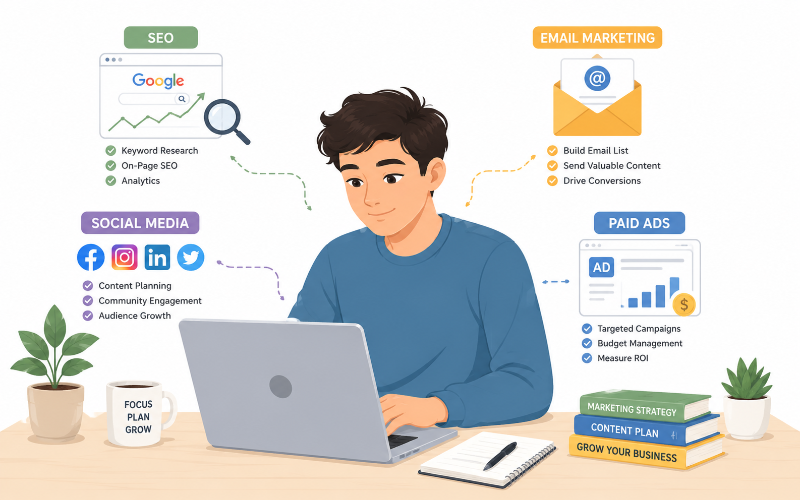
Email Marketing
Email marketing remains one of the highest-converting digital channels for startups. Once someone joins your list, you have a direct, owned line of communication with them. Use email to:
- Nurture leads with educational sequences
- Onboard new users and reduce churn
- Re-engage dormant customers with targeted campaigns
- Announce product updates, promotions, and company milestones
Tools like Mailchimp, ConvertKit, or HubSpot make it easy to automate email flows that run 24/7 — even when your team is asleep.
Paid Advertising (Google & Meta Ads)
Paid advertising is the fastest way to get traffic and leads for your startup. Google Ads can put your brand in front of high-intent searchers; Meta Ads (Facebook & Instagram) allow precise audience targeting based on demographics, interests, and behaviors.
However, startups should approach paid ads with caution. Without proper budget controls and conversion tracking in place, ad spend can drain quickly without meaningful returns. Use paid advertising to test messaging and offers, then double down on what works organically.
How to Create a Digital Marketing Strategy for a Startup
Define Your Target Audience
Before spending a single dollar on marketing, you need a crystal-clear picture of who you’re marketing to. Build a detailed buyer persona that includes demographics, job roles, pain points, goals, and preferred online channels. The more specific your audience definition, the more targeted and effective your campaigns will be.
Set Marketing Goals
Your marketing strategy needs clear, measurable goals tied to business outcomes. Use the SMART framework — Specific, Measurable, Achievable, Relevant, and Time-bound. Examples: ‘Generate 500 organic visitors per month within 6 months’ or ‘Acquire 100 email subscribers in 30 days.’
Choose the Right Channels
Don’t try to be everywhere at once. Based on your audience research and budget, select two to three channels and go deep rather than spreading yourself thin. Here’s a quick reference for matching goals to channels:
| Goal | Best Channel |
| Brand Awareness | Social Media (Instagram, LinkedIn, TikTok) |
| Lead Generation | SEO + Content Marketing |
| Fast Traffic | Paid Ads (Google, Meta) |
| Customer Retention | Email Marketing |
| Authority Building | Content Marketing + SEO |
Create Valuable Content
Content is the fuel that powers every digital marketing channel. Develop a content calendar that maps out topics, formats, and publishing cadence. Prioritize content that directly addresses your audience’s biggest questions and pain points — this is what earns organic traffic, social shares, and backlinks.
Track Performance Metrics
What gets measured gets improved. Set up tracking from day one using Google Analytics 4 and Google Search Console. Define your key performance indicators (KPIs) for each channel — organic sessions, email open rates, cost per lead, conversion rate — and review them weekly to optimize your strategy.
Common Digital Marketing Mistakes Startups Should Avoid
Trying Every Channel at Once
One of the most common mistakes early-stage startups make is spreading their limited resources across too many channels simultaneously. The result is mediocre performance everywhere and mastery nowhere. Focus on one or two channels, execute them well, and expand only after you’ve built traction.
Ignoring SEO
Many startups gravitate toward paid ads because they deliver instant results. However, ignoring SEO means missing out on sustainable, compounding traffic that doesn’t disappear the moment your ad budget runs out. Invest in SEO early — the payoff grows exponentially over time.
No Clear Target Audience
Marketing to everyone means resonating with no one. Startups that fail to define a specific target audience end up creating generic content, running unfocused ad campaigns, and wasting budget. Nail your buyer persona before running a single campaign.

Focusing Only on Paid Ads
Paid advertising is effective but unsustainable as your primary growth engine. When ad budgets are cut, traffic drops to zero instantly. Build organic channels — SEO, content, email — in parallel so your growth doesn’t depend entirely on paid spend.
Not Tracking Results
Running marketing campaigns without tracking is like driving blindfolded. Without data, you have no idea what’s working, what’s wasting money, or where to invest next. Set up analytics from day one and make data-driven decisions a core part of your marketing culture.
Digital Marketing Budget for Startups
One of the most common questions founders ask is: how much should a startup spend on digital marketing? The answer depends on your stage, goals, and runway — but here’s a practical framework for early-stage startups:
- 40% — Content creation (blog posts, videos, graphics, copywriting)
- 30% — SEO (tools, link building, technical optimization)
- 20% — Paid advertising (test campaigns on Google or Meta)
- 10% — Marketing tools (email platform, analytics, design software)
In the early stages, prioritize organic channels (SEO + content) before scaling paid ads. Organic traffic compounds over time and reduces your long-term customer acquisition cost significantly. Once you’ve validated your messaging and have a converting landing page, then allocate more budget to paid advertising to accelerate growth.
Best Digital Marketing Tools for Startups
Google Analytics 4
Google Analytics 4 (GA4) is the essential free tool for tracking website traffic, user behavior, and conversion events. Set it up before you launch any campaigns so you have baseline data from day one.
Google Search Console
Google Search Console shows you exactly how your site performs in Google search — which keywords you rank for, how many impressions and clicks you receive, and any technical issues that may be affecting your rankings. It’s free and indispensable for any startup pursuing SEO.
Ahrefs / SEMrush
Both Ahrefs and SEMrush are powerful SEO platforms for keyword research, competitor analysis, backlink auditing, and content planning. They’re an investment, but they pay for themselves quickly by helping you identify high-value opportunities and avoid wasted effort.
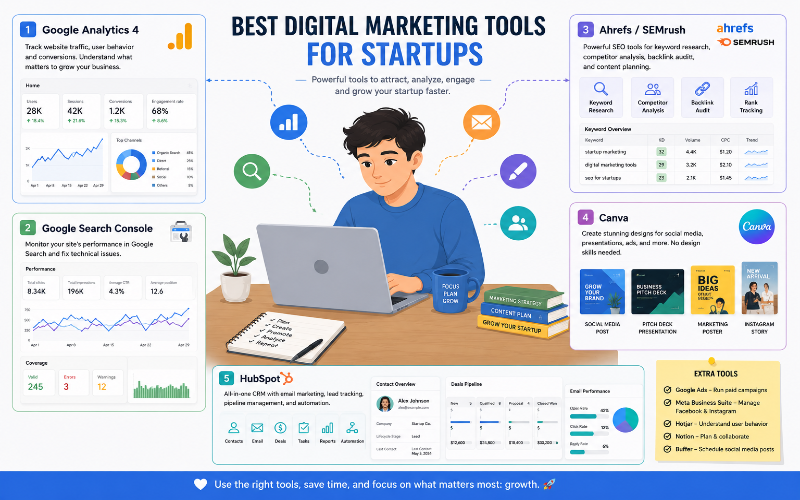
Canva
Canva is a user-friendly design tool that allows non-designers to create professional-looking graphics, social media posts, presentations, and marketing materials. The free plan is sufficient for most early-stage startups.
HubSpot
HubSpot offers a powerful free CRM with built-in email marketing, lead tracking, and pipeline management tools. As your startup scales, HubSpot’s paid tiers unlock advanced marketing automation, landing page builders, and A/B testing capabilities.
Final Thoughts
Digital marketing is not optional for startups — it’s the foundation of sustainable growth. The good news is that you don’t need a massive budget to get started. By focusing on SEO and content marketing first, you build a durable traffic engine that compounds over time and reduces your dependence on expensive paid channels.
Start with a clear target audience, pick two or three channels, publish consistently valuable content, and track everything. Then iterate based on data. The startups that win at digital marketing aren’t the ones with the biggest budgets — they’re the ones with the clearest strategy and the discipline to execute it.
Looking for custom digital marketing solutions for your startup? Contact our team today and let’s build your growth engine together.
Frequently Asked Questions
What is the best digital marketing strategy for startups?
The best strategy for most startups is to combine SEO and content marketing as your primary organic channels, supplemented by email marketing for lead nurturing. This combination delivers sustainable, compounding traffic and leads without relying entirely on paid ad budgets. Once you’ve validated your messaging and conversion funnel, add paid advertising to accelerate growth.
How much should a startup spend on digital marketing?
Early-stage startups typically allocate between 5% and 15% of their monthly revenue to marketing. If you’re pre-revenue, a lean budget of $500–$2,000/month focused on content creation and basic SEO tools can be enough to build initial traction. As revenue grows, increase your marketing investment proportionally.
Is SEO good for startups?
Absolutely. SEO is one of the best long-term investments a startup can make. While it takes 3–6 months to see significant results, the traffic and leads you generate through SEO are essentially free — meaning your cost per acquisition decreases over time. Startups that invest in SEO early build a competitive moat that’s very difficult for competitors to replicate quickly.
Which marketing channel works fastest for startups?
Paid advertising (Google Ads or Meta Ads) delivers traffic the fastest — sometimes within hours of launching a campaign. However, this traffic stops the moment you stop spending. For fastest results with lasting impact, combine a small paid campaign to test messaging with simultaneous investment in SEO and content so your organic presence grows in parallel.
How long does digital marketing take to work?
It depends on the channel. Paid ads can deliver traffic within 24–48 hours. Social media can generate engagement within days if you produce compelling content. SEO and content marketing typically take 3–6 months to show meaningful organic traffic growth, but the results compound significantly over 12–24 months. Email marketing produces results in proportion to your list size and the quality of your sequences.