
Why Businesses Need Custom Solutions to Stay Competitive
May 27, 2026
In today’s fast-moving digital economy, businesses face a critical choice: adapt with tools built for them, or struggle to fit their unique operations into generic software boxes. The answer is becoming increasingly clear — custom solutions are no longer a luxury, they’re a necessity.
The Problem with Off-the-Shelf Software
Many businesses start with ready-made software because it’s fast, affordable, and familiar. But as companies grow, the cracks begin to show.
- Features you don’t need clutter the interface
- Features you do need are missing or locked behind expensive upgrades
- Integrations with existing tools are limited or broken
- You pay per seat, per module, and per feature — costs spiral quickly
Generic software is built for the average business. But your business isn’t average.

What Are Custom Solutions?
Custom solutions are software, platforms, or systems built specifically for your business’s workflows, goals, and scale. They can include:
- Custom web applications tailored to your internal processes
- CRM & ERP systems configured around how your team actually works
- Automation tools that eliminate manual, repetitive tasks unique to your operations
- Integrations that connect every tool your team uses into one seamless ecosystem
Unlike off-the-shelf products, custom solutions evolve with your business.
5 Key Reasons Businesses Need Custom Solutions
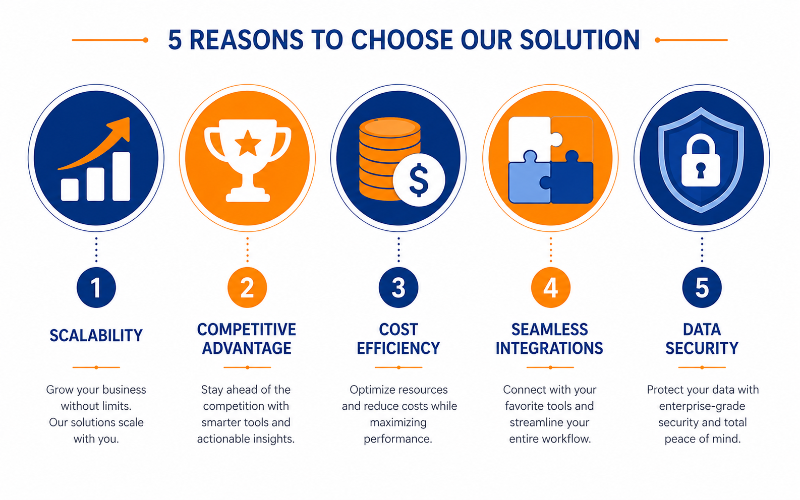
1. Scalability That Grows With You
Off-the-shelf software has a ceiling. When your team doubles, your data triples, or your business enters a new market, generic tools often can’t keep up. Custom solutions are architected for your growth trajectory — you own the roadmap.
2. Competitive Advantage Through Unique Workflows
Your internal processes are part of your competitive edge. Why hand that edge over to a vendor who sells the same tool to your competitors? Custom software encodes your unique processes and makes them repeatable, faster, and harder to copy.
3. Cost Efficiency in the Long Run
Custom development requires upfront investment, but it eliminates:
- Monthly per-user SaaS fees
- Unused feature bloat
- Workarounds that waste employee time
- Migration costs every time a vendor pivots or shuts down
A well-built custom system typically pays for itself within 2–3 years.
4. Seamless Integration Across Your Tech Stack
Modern businesses run on dozens of tools — accounting software, CRMs, communication platforms, e-commerce systems. Custom solutions can be built to speak the language of every tool in your stack, eliminating data silos and manual data entry.
5. Full Data Ownership and Security
With SaaS products, your data lives on someone else’s servers, governed by their terms. Custom solutions let you define where your data lives, who accesses it, and how it’s protected — critical for industries with compliance requirements (healthcare, finance, legal).
Real-World Industries Transformed by Custom Solutions
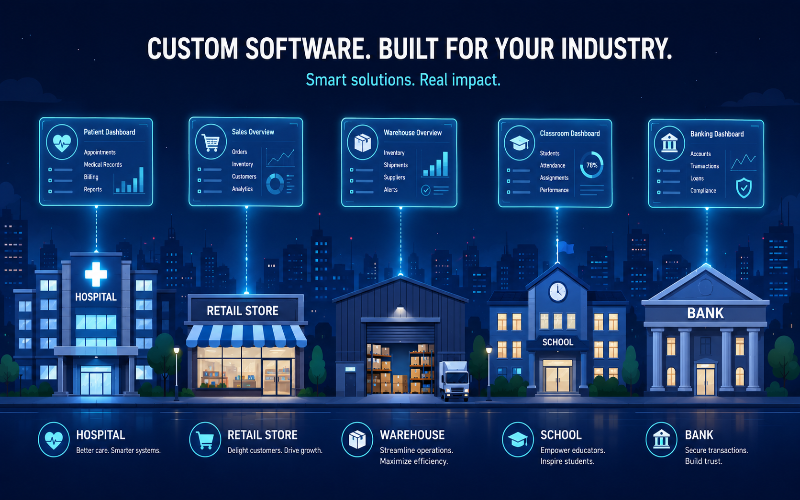
Custom development isn’t just for tech giants. It’s transforming businesses across every sector:
| Industry | Custom Solution Example |
|---|---|
| Retail | Inventory management synced with POS, e-commerce, and suppliers in real time |
| Healthcare | Patient management portals with HIPAA-compliant data handling |
| Logistics | Route optimization dashboards with live GPS and driver communication |
| Education | Custom LMS platforms built around specific curriculum structures |
| Finance | Automated reporting tools that connect banks, accounting, and forecasting |
Custom vs. Off-the-Shelf: A Side-by-Side Comparison
| Feature | Off-the-Shelf | Custom Solution |
|---|---|---|
| Setup Speed | Fast | Moderate (weeks–months) |
| Upfront Cost | Low | Medium–High |
| Long-term Cost | High (subscriptions) | Low (you own it) |
| Fit to Business | Generic | Perfect fit |
| Scalability | Limited | Unlimited |
| Data Ownership | Vendor’s servers | Yours |
| Competitive Edge | None | High |
How to Know If Your Business Is Ready for a Custom Solution
Ask yourself:
- Are your teams using spreadsheets to fill gaps between software tools?
- Are you paying for features you never use?
- Do you have a process that no existing software supports?
- Is your current software slowing down growth?
- Have you outgrown your current platform?
If you answered yes to 2 or more, it’s time to explore custom development.
Getting Started with a Custom Solution
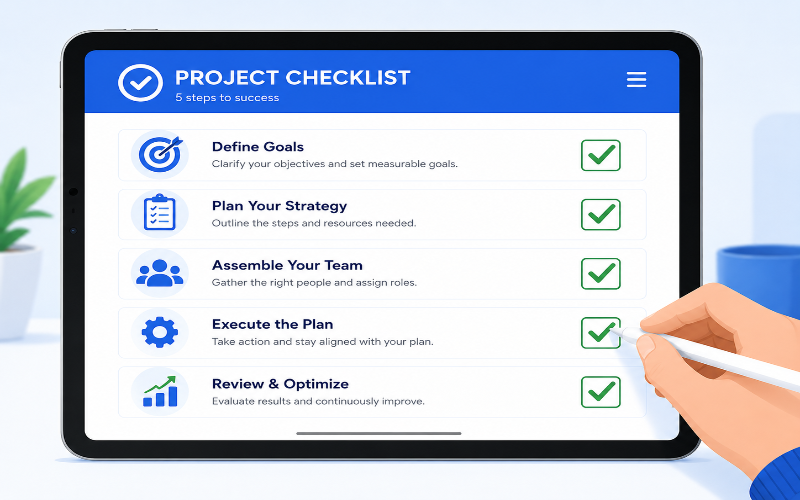
You don’t have to build everything at once. A smart approach:
- Audit your current tools — identify gaps and overlaps
- Define your core workflow — what process, if optimized, would have the biggest impact?
- Partner with a development team that understands your industry
- Start with an MVP (Minimum Viable Product) — test, learn, iterate
- Scale over time — add features based on real usage data
Conclusion — Build for Your Business, Not Someone Else’s
The most successful businesses in 2025 aren’t just using technology — they’re owning it. Custom solutions put you in control: of your workflows, your data, your costs, and your growth.
Off-the-shelf might get you started. Custom solutions get you ahead.